A pet can return to the same corner, rug edge or sofa cushion long after you think it is clean. That is because their nose is picking up what yours cannot. If you are working out how to stop repeat pet marking, the answer is not a stronger fragrance or a quick surface wipe. You need to remove the urine residue completely, find every affected area, and deal with the reason your pet is choosing that spot.
Repeat marking is frustrating, but it is usually fixable. Start with the scent trail, then make the area less appealing and check whether stress, routine changes or a health issue are part of the picture.
Why pets keep marking the same place
Urine marking is communication. Cats and dogs may use small amounts of urine to claim territory, react to another animal, respond to stress, or signal changes in their environment. It is different from a full toileting accident, although the cleaning approach matters just as much in both cases.
The trouble is that ordinary cleaners often deal with what you can see, not what your pet can smell. Urine can soak through carpet fibres into the backing, underlay and subfloor. On furniture, it can travel into foam. Even when the visible stain has faded, trace residue can remain and act like a signpost saying, “use this spot again”.
A scented spray may make the room smell fresher to people, but it does not remove the source. In some cases, strong fragranced products can simply create a mix of perfume and urine odour. No masking, no gimmicks: the residue itself needs to be broken down.
How to stop repeat pet marking: remove the scent trail
Treat the affected spot as deeper than it looks. If a pet has urinated on carpet, a light mist on the surface is unlikely to reach the urine beneath it. The treatment needs enough contact time and coverage to reach the same depth as the original accident.
First, blot fresh urine with clean, absorbent towels. Press firmly rather than rubbing, which can spread the urine through a wider area. If the area is already dry, locate it before cleaning. Your nose may help, especially in warm or humid conditions, but a UV light can reveal old splashes and hidden spots around skirting boards, furniture legs, doorways and along carpet edges.
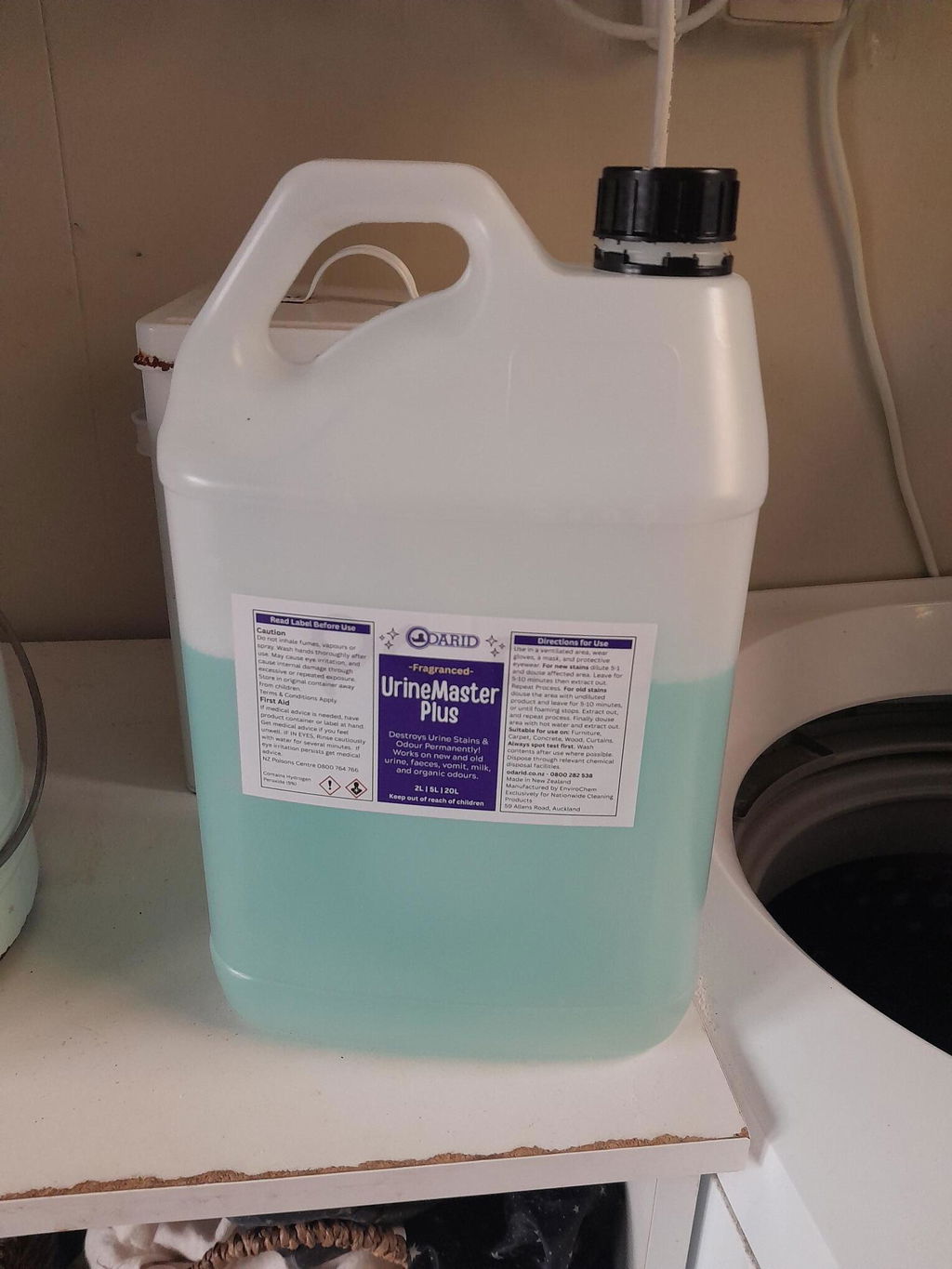
Use a purpose-made pet urine odour remover that is designed to eliminate urine compounds rather than cover them up. A professional-strength formulation such as Cleansmart Odarid is made to target urine odours and stains at the source. Follow the label directions carefully, saturating the affected area as needed so the product can reach below the surface. Allow the recommended dwell time, then let it dry fully.
Drying matters. A treated carpet can smell stronger while it is wet because moisture lifts trapped odours into the air. Do not assume the product has failed halfway through the process. Once dry, reassess the area. If the odour remains, the urine may have reached the underlay or subfloor and a second, deeper treatment may be needed.
Avoid cleaners that can make the problem harder
Steam cleaning can set protein-based stains and odours if used before the urine has been properly treated. Heat may also drive residue further into carpet backing or upholstery. Leave steam cleaning until after odour treatment, if it is needed at all.
Avoid ammonia-based cleaners as well. Urine naturally contains ammonia-like compounds, and some pets may interpret that smell as another toilet signal. Bleach is not suitable for urine-contaminated areas, particularly in enclosed spaces, as it can create harmful fumes when mixed with urine residues. Never mix cleaning products.
Find the hidden spots before they become a pattern
A pet may have more than one favourite marking zone. Cleaning only the obvious patch often leaves another scent trail nearby, then the behaviour continues and looks like the product did not work.
Check the areas that commonly get missed: behind curtains, beside exterior doors, around windows, near pet beds, under dining chairs, along hallway walls, behind pot plants and at the base of scratching posts. For male dogs, inspect vertical surfaces and the lower edges of furniture. For cats, look near windows where they can see neighbourhood cats outside.
If urine has soaked into a mattress, couch insert, thick rug or carpet underlay, treat both sides where possible. Washable covers should be cleaned according to their care label, but washing alone may not eliminate embedded odour from the foam or inner padding. In severe or long-standing cases, a carpet cleaner or restoration professional may be the practical next step, especially when urine has reached timber, particleboard or concrete beneath flooring.
Make the marked area less available
Cleaning removes the invitation. Management stops your pet rehearsing the behaviour while you address the trigger.
For a few weeks, restrict access to known problem areas when you cannot supervise. Shut doors, use a pet gate, move furniture, or cover the spot with a washable waterproof barrier. This is not a punishment. It simply prevents another deposit while the scent trail fades and a new routine takes hold.
Once the area is fully clean and dry, change its purpose. Feed your pet there if appropriate, place a bed nearby, or use the space for calm play and positive attention. Most pets prefer not to toilet where they eat or rest. For cats, a scratching post or perch near a window can help redirect territorial behaviour from the carpet to something more suitable.
Outdoor triggers matter too. If a cat is marking near a particular window, reduce visual contact with roaming cats by closing the blind at key times or using a privacy film. If a dog is reacting to animals passing the fence, block the view where practical and supervise outdoor time until the habit settles.
Reduce the reasons pets mark indoors
A perfectly cleaned home can still see repeat marking if the cause is unresolved. Common triggers include a new baby, visitors, moving house, renovations, unfamiliar smells, another pet, schedule changes, tension between animals, or outdoor cats near the home.
Keep routines predictable. Feed, walk and play with your pet at broadly consistent times. Give multi-pet households enough resources so there is less competition: separate feeding areas, several resting places, more than one water bowl, and quiet escape spaces.
For cats, litter tray setup is often the deciding factor. A useful rule is one tray per cat, plus one extra, placed in separate quiet locations. Scoop daily, keep trays away from food and noisy appliances, and use a litter texture your cat will accept. A cat that dislikes the tray may choose a soft rug or carpet instead, then return because it now smells familiar.
Do not tell off a pet after you find a mark. They will not connect the punishment with an earlier act, and stress can increase marking. Calm interruption, prompt cleaning and rewarding the right toileting behaviour works far better.
When repeat marking needs a vet check
Sudden changes in toileting behaviour should never be written off as bad behaviour. Cats and dogs may urinate outside their usual area because of urinary tract irritation, pain, bladder stones, incontinence, kidney issues, arthritis, diabetes or other medical concerns.
Arrange a veterinary check promptly if your pet is straining to urinate, producing only tiny amounts, crying, licking their genital area excessively, passing blood, drinking much more than usual, or has suddenly started marking despite being reliably toilet trained. A blocked cat, particularly a male cat, needs urgent veterinary attention.
If medical causes are ruled out but the marking continues, a qualified animal behaviourist can help identify household triggers and create a plan tailored to your pet. Desexing can reduce hormone-driven marking for some animals, but it is not a guaranteed fix when a learned habit or stress factor remains.
Keep the home fresh while the habit resets
For the next few weeks, inspect former marking areas regularly. Treat any new incident straight away, before it dries and becomes another scent marker. Keep spare towels and your urine odour remover in an easy-to-reach cupboard so the response is quick, not a weekend job.
The real win is not covering up a smell before guests arrive. It is giving your pet no urine signal to follow, a calmer reason to use the right place, and a home that genuinely smells clean again.