A bleach smell can make a room feel clean long before the actual problem is gone. That is the trap with many tough cleaning jobs. In the hydrogen peroxide vs bleach cleaning debate, the right choice depends on what you are trying to remove: a surface germ risk, a coloured stain, mould growth, or an odour embedded in carpet, fabric or grout.
Both products are oxidisers, meaning they change and break down certain compounds. But they do not behave the same way, and neither is a universal answer for every Kiwi home. Using the wrong one can leave a stain behind, damage a surface, or create a far more serious safety issue.
Hydrogen peroxide vs bleach cleaning: the key difference
Household bleach usually contains sodium hypochlorite. It is a strong disinfectant and whitening agent, particularly useful on suitable hard, non-porous surfaces. Its sharp scent is familiar, but scent is not proof that a surface is hygienically clean.
Hydrogen peroxide is another oxidising cleaner. It breaks down into water and oxygen after use, although the speed of that process depends on the formula, concentration and surface. In cleaning products, it can help lift organic stains, brighten discolouration and tackle odour-causing residue without the chlorine bleach smell.
The practical difference is simple. Bleach is often chosen for disinfection and whitening on compatible hard surfaces. Hydrogen peroxide is often the better fit where stains and organic odours are the real issue, especially on colourfast washable fabrics and some soft furnishings. Always follow the product label, including its contact time and surface instructions.
When bleach is the better choice
Bleach has a place in household cleaning. On a bleach-safe toilet bowl, for example, it can be useful for whitening and reducing germs. It may also be appropriate for hard, non-porous surfaces after a stomach bug, raw-meat spill or other situation where the label confirms it is suitable for disinfection.
It can be effective on visible mould staining on appropriate tiles, sealed shower surfaces and some outdoor hard surfaces. However, bleach is not a magic mould cure. If moisture remains trapped behind silicone, under flooring or inside a wall lining, the mould will return. Fix ventilation, leaks and condensation alongside cleaning the visible growth.
Bleach is less useful when the problem is inside absorbent material. It may lighten the mark on carpet or fabric while leaving urine crystals, food residue or other odour sources underneath. That is how a room can look better but still smell unpleasant when humidity rises.
Bleach is also a poor choice for many everyday surfaces. It can fade fabric, strip colour from carpet, harm timber finishes, corrode some metals and damage natural stone. Never assume a white-looking surface is bleach-safe.
Where hydrogen peroxide earns its keep
Hydrogen peroxide-based cleaners are valued for problems that need more than fragrance or a surface wipe. Oxidation can help break apart the coloured compounds in stains and the organic residue behind lingering smells. That makes it useful for vomit, food spills, blood, sweat, pet accidents and musty organic staining, provided the product is designed for the surface.
For pet urine, the job is not simply to remove the visible spot. Urine can travel through carpet pile into the backing, underlay and even the subfloor. A surface spray that smells nice may only cover the issue for a day. The affected area needs enough treatment to reach the contamination, then sufficient dwell time to work before blotting or extraction.
Hydrogen peroxide is not automatically safe on every material. It can lighten dyes, particularly on dark carpet, coloured upholstery, wool, silk and delicate fabrics. Test a hidden area first and let it dry fully before judging the result. Do not oversaturate carpet, mattresses or cushions, as excess moisture can create its own mould and odour problem.
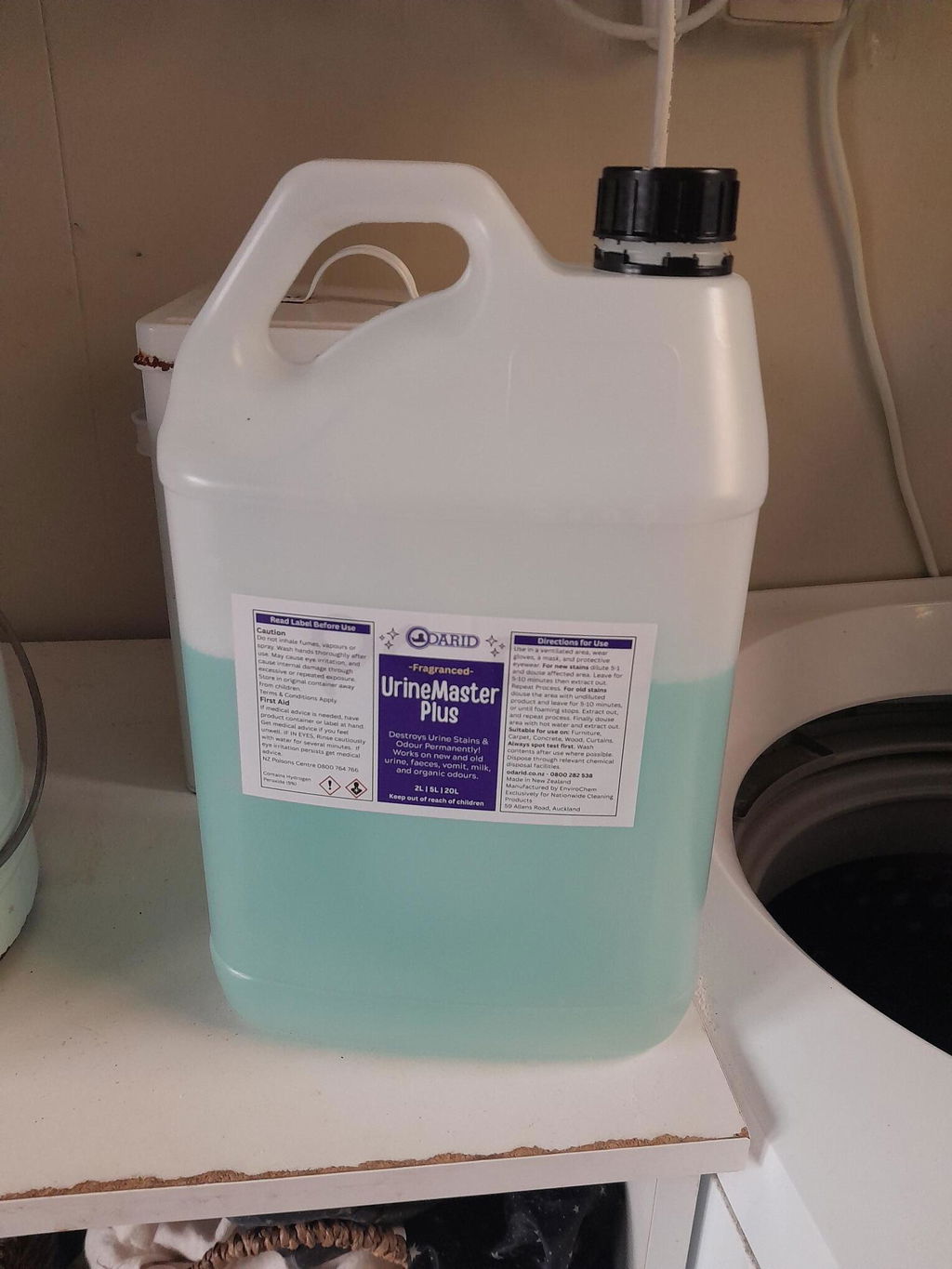
For recurring pet odours, a targeted formula is usually more reliable than a generic peroxide bottle. Cleansmart Odarid, for instance, is designed to address the source of urine odour rather than perfume over it. That distinction matters when a pet keeps returning to the same spot.
Stains, odours and mould need different approaches
The biggest cleaning mistake is treating every mark as though it has the same cause. A brown tannin stain from tea, a greasy splash beside the cooktop and a pet urine odour each need different chemistry and handling.
Hydrogen peroxide may help with organic and coloured stains, but it is not a degreaser. For kitchen grease or soap scum, use a cleaner formulated to cut oils and mineral deposits first. Applying peroxide to a greasy surface can leave you with a cleaner-smelling mess that still needs scrubbing.
Bleach may make mould marks appear lighter, yet it does not remove soap scum or scale that gives bathroom grime something to cling to. Clean the surface first, then use the suitable mould treatment according to its label. Rinse where required and dry the area afterwards.
Odours deserve particular care. Bleach can create a strong chlorine smell that overwhelms a bad odour temporarily. Once that scent fades, the original issue can become obvious again. With urine, milk, food spills or damp carpet, focus on removing the residue. No masking, no guesswork.
Safety rules that are not optional
Bleach and hydrogen peroxide should never be mixed with each other, even if both are common cleaning products. Mixing chemicals can trigger reactions, release irritating fumes or reduce their intended performance. Use one product, rinse thoroughly if required, allow the area to dry and ventilate well before using another.
Never mix bleach with ammonia, vinegar, toilet cleaner, descaler, methylated spirits or any unidentified product. Do not pour different cleaners into the same spray bottle. Keep each product in its original labelled container, out of reach of children and pets.
Good ventilation matters with either cleaner. Open windows where possible, wear gloves if the label advises it and avoid getting product into eyes. If a cleaning chemical splashes onto skin or into eyes, follow the first-aid directions on the label straight away. For serious exposure or breathing trouble, seek urgent medical advice.
A few sensible habits prevent expensive mistakes:
- Patch-test coloured carpet, upholstery, curtains and painted finishes before treating a visible area.
- Check whether a surface is porous. Unsealed stone, timber, grout and concrete can absorb cleaners and stains.
- Respect dilution directions. Stronger is not always better, and it can increase surface damage.
- Do not use bleach on wool, silk, leather, natural stone, aluminium or unknown finishes unless the manufacturer specifically permits it.
- Keep pets and children away until the treated area is dry and the space has aired out.
How to choose for common household jobs
For a toilet, bleach may be a sensible choice where its disinfecting and whitening action is wanted and the product label approves the use. For a shower with soap scum and mould, remove the soap scum first, then choose a mould product suited to the tile, grout and ventilation conditions.
For a fresh pet accident on colourfast carpet, blot up as much liquid as possible before applying a purpose-made urine treatment. Do not rub the area, as that pushes contamination deeper and spreads the stain. If the smell has been present for weeks, treatment may need to reach below the carpet surface, and professional cleaning can be worthwhile for heavy contamination.
For stained white laundry, either product may be appropriate depending on the care label and product directions. Bleach can be harsh on fibres and can yellow or weaken some fabrics over time. Hydrogen peroxide-based laundry products are often preferred for colour-safe brightening, but the garment label still has the final say.
For mouldy curtains or fabric, do not reach for bleach without checking the fibre and care instructions. Bleach can cause permanent damage and uneven fading. Remove dust, treat according to a fabric-safe cleaner's directions and make sure the window area is dry and well ventilated before rehanging.
The result should last after the scent has gone
A proper clean is not the strongest fragrance or the whitest-looking patch. It is a surface that is appropriate for use, a stain that has been properly treated, and an odour that does not return on a damp day. Choose bleach when you need its specific hard-surface disinfection or whitening strengths. Choose hydrogen peroxide-based cleaning when organic stains and source-level odours need attention. Then give the product the time, coverage and conditions it needs to do the job properly.
See why we build Odarid on hydrogen peroxide, not bleach
Effective on pet odour and stains, without the fumes or the damage risk that comes with bleach.
Shop Odarid →750+ five-star reviews on Odarid alone · NZ-made, family-run since 2004